
Introduction

Choosing between organization and organisation is simpler than it seems. Both words mean the same thing; the difference is regional spelling. This concise, mobile-first checklist helps writers, marketers, and students in Malaysia decide quickly, stay consistent, and protect privacy when using spellcheck tools. For a straight comparison and quick decision path, see organization vs organisation early in your drafting process.
As of 2025, the practical rule remains: use the spelling that matches your audience’s dialect or your style guide. The rest of this guide shows how to apply that rule with confidence, complete with examples, memory aids, and a summary checklist you can follow on the go. Understanding these variations can enhance your writing’s professionalism and ensure it resonates with the intended readers.
What is the Difference Between Organisation and Organization?
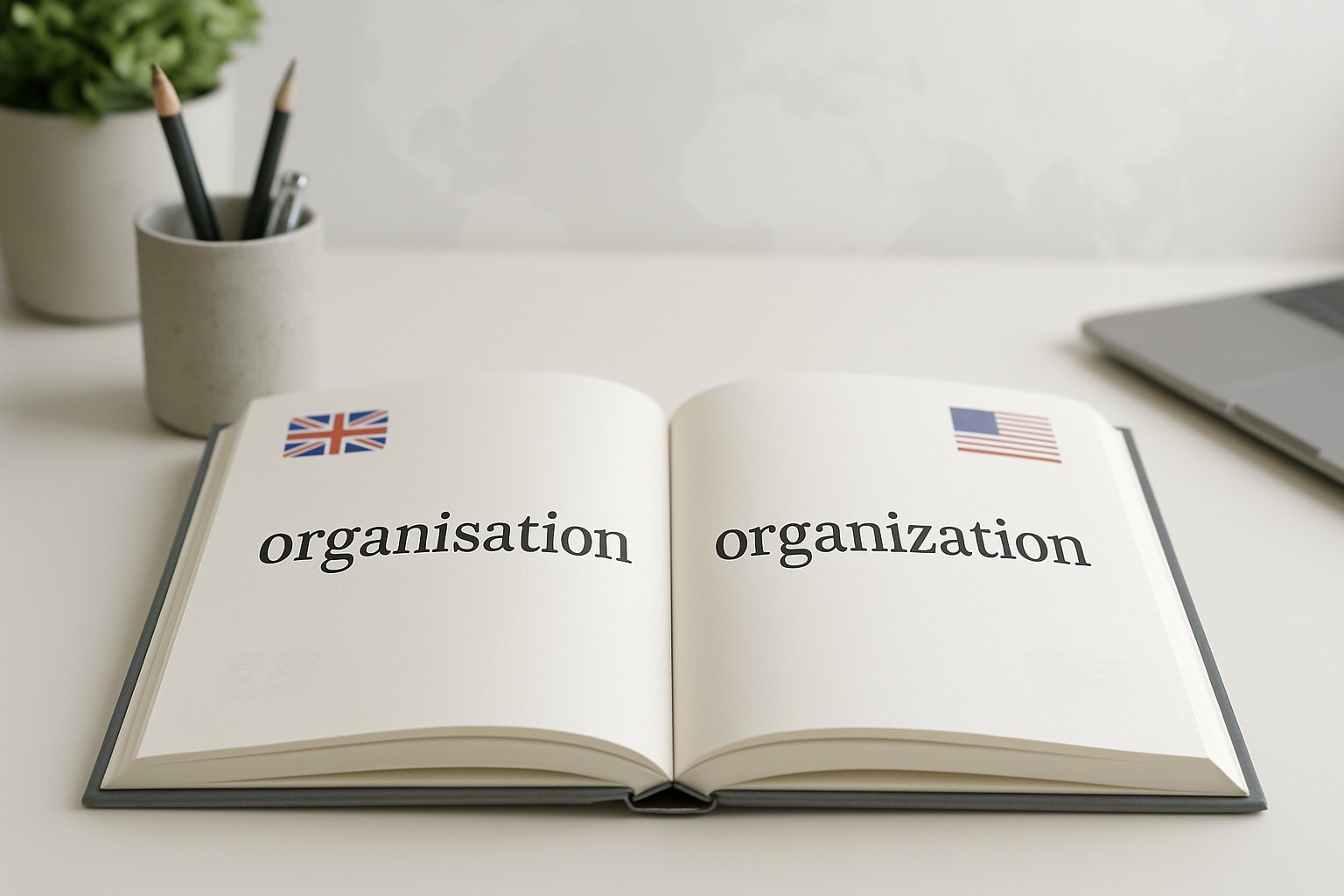
The distinction between organisation and organization lies primarily in regional preferences, with no variation in their core meanings. This section explores the definitions and key spelling differences to help you navigate these choices effectively. By grasping these nuances, you’ll be better equipped to maintain consistency in your writing.
Definition of Organization
Organization (with a z) refers to a structured group of people with a particular purpose, or the act of arranging things systematically. It is the preferred form in American English and is standard in U.S. publications, legal texts, and business writing. Many global software interfaces also default to this spelling unless localized. This choice often aligns with broader American English conventions, making it ideal for content targeting U.S. audiences.
Definition of Organisation
Organisation (with an s) has the same meanings and is the conventional spelling in British English and across many Commonwealth countries, including Malaysia. It appears in UK government documents, British media, and academic writing following British style. Many international NGOs and universities using British style also prefer this form. Opting for organisation can help your content feel more familiar to readers in regions influenced by British English traditions.
Key Spelling Variation
The key variation is the z versus s in the suffix. American English favors -ize/-ization (organize, organization). British English commonly uses -ise/-isation (organise, organisation), although Oxford style allows -ize in some UK contexts. When in doubt, follow the target audience’s dialect or the specified style guide. This consistency not only aids readability but also boosts SEO by matching user search terms like “organization vs organisation.”
When to Use Organization
Deciding when to use organization involves considering your audience and the context of your writing. This American English variant is particularly suitable in certain professional and regional settings. The following subsections provide detailed guidance and examples to illustrate its appropriate application.
American English Contexts
American media, federal and state documents, and U.S. universities standardize on organization. Corporate communications for U.S.-headquartered companies typically do the same, even for global materials. SEO targeting U.S. users should match American spelling to align with search intent and dictionary settings on American devices. This approach ensures your content ranks better in searches related to “organization vs organisation” within American contexts.
Examples in Sentences
The organization approved the policy after a two-week review, demonstrating efficient decision-making processes. Effective organization of files reduced the team’s response time, leading to improved productivity across departments. Our organization partners with local schools to expand digital literacy, fostering community development through targeted educational programs. These examples highlight how the term integrates naturally into various sentences in American English writing.
When to Use Organisation
Organisation is the go-to spelling in British English and related dialects, making it essential for specific audiences. Understanding its usage can prevent common errors and enhance the authenticity of your content. Below, we delve into contexts and examples to guide your choices.
British English Contexts
British newspapers, UK legal and regulatory documents, and most Commonwealth style guides prefer organisation. Universities using British conventions—common in Malaysia—expect students to maintain this spelling unless directed otherwise. Many international NGOs and professional bodies registered in the UK also adopt organisation in formal branding. This preference helps maintain a cohesive tone in documents influenced by British English standards.
Examples in Sentences
The organisation is hosting a careers fair next month, inviting participants from various sectors. Strong organisation of course materials helps students revise efficiently, promoting better academic outcomes. Our charity is a non-profit organisation focused on community health, delivering services to underserved populations. Such sentences showcase the term’s seamless integration in British English contexts.
Trick to Remember the Difference
Remembering the difference between organization and organisation can be straightforward with the right strategies. This section offers practical tricks and warnings to avoid common mistakes. Implementing these can streamline your writing process and reduce errors.
Mnemonic Devices
Link Z to the U.S.: organization has a z and so does the abbreviation “U.S.” Link S to the Commonwealth: organisation uses an s, like “Commonwealth” starts with a soft consonant sound. Another cue: think “-ize for the States; -ise for the rest.” These short prompts are easy to recall when drafting on mobile. They serve as quick mental shortcuts to ensure you choose the correct spelling variant promptly.
Common Pitfalls
A frequent error is mixing spellings in one document, which can confuse readers and undermine professionalism. Pick a variant and stick to it—especially for headings, CTAs, and UI labels. Another pitfall is overriding official names; if a registered name uses Organization or Organisation, reproduce it exactly. Finally, when using grammar tools, select your locale and consider offline dictionaries to protect privacy. Being aware of these issues helps maintain consistency and enhances the overall quality of your work.
Summary
Both spellings are correct; choose based on audience or required style. In Malaysia, British English and organisation are widely accepted, but American organization fits U.S.-focused work. Decide early, set your device dictionary accordingly, and maintain consistency from subject lines to footers. To apply this effectively, start by identifying your audience’s dialect, such as US versus UK or Commonwealth preferences. Then, lock in your style guide choice between organization or organisation for the entire piece. Next, configure your mobile keyboard and spellcheck to the appropriate locale to catch inconsistencies automatically. Additionally, ensure that related forms like -ize or -ise are matched throughout the document. Finally, always honor official names and quoted text by reproducing them exactly as they appear.
Main Differences Between American and British English
Beyond organization/organisation, several patterns help writers stay consistent. Knowing the most visible differences saves time during editing, prevents distracting inconsistencies, and improves user trust—especially in UI text where space is tight on mobile screens. This section breaks down key variations in spelling, vocabulary, and grammar to provide a comprehensive overview.
| Feature | American English | British English |
|---|---|---|
| Target word | organization | organisation |
| Suffix pattern | -ize / -ization | -ise / -isation (Oxford allows -ize) |
| -or vs -our | color, behavior | colour, behaviour |
| -er vs -re | center, meter | centre, metre |
| Program(me) | program (general) | program (computing); programme (general) |
| Collective nouns | team is (singular) | team are (often plural) |
Spelling Variations
American spelling favors simplified endings like -or (color) and -er (center), alongside -ize (organize). British spelling prefers -our (colour) and -re (centre), and often -ise (organise). Apply patterns consistently so readers are not jolted by alternating forms in the same piece. This uniformity is crucial for SEO, as it aligns with searches like “American vs British spelling.” Moreover, consistent spelling enhances the professionalism of your content.
Vocabulary Differences
Word choices vary: elevator (US) vs lift (UK), apartment vs flat, truck vs lorry, and cookie vs biscuit. When localizing content, map keywords and UI labels to the audience’s expectations. For mixed or global audiences, choose one variety and note alternatives only where clarity requires it. These differences can significantly impact how your message is received, especially in international communications. Awareness of such variations aids in creating more inclusive and effective content.
Grammar Nuances
Collective nouns are typically singular in American English and more fluid in British English, which can treat them as plural. Prepositions and usage also differ: on the weekend (US) vs at the weekend (UK), and write to me (UK) vs write me (US). Keep these patterns aligned with your chosen spelling to avoid tonal mismatches. Such nuances contribute to the overall flow and authenticity of your writing. Mastering them can elevate the quality of cross-cultural communications.
FAQs
These quick answers address the most common beginner questions so you can decide faster and write with confidence. Navigating the differences between organization and organisation often raises similar queries, and this section provides clear, concise responses. Whether you’re a student or professional, these FAQs can serve as a handy reference.
Is one spelling more correct than the other?
No. Organization and organisation are both correct. Use the spelling that matches your audience or the style guide you are following. Consistency within a single document matters more than the variant chosen. This approach ensures your writing remains professional and error-free.
Which spelling should people in Malaysia use?
Malaysia often follows British English in education and public communication, so organisation is standard. However, if you are writing for a U.S. client or platform, organization is appropriate. Prioritize your reader’s expectations and any explicit style rules. In mixed contexts, consulting a style guide can provide additional clarity.
How can I avoid mixing spellings on mobile?
Set your mobile keyboard and spellcheck to the target locale (English US or English UK). Create a document template with your chosen variant, and run a final locale-specific spellcheck. If privacy is important, consider offline dictionaries or device-based tools instead of cloud services. These steps help maintain consistency without compromising data security.
About The Author
